THE JOURNAL
Aaron Levine has spent a lot of time thinking about what to call his brand. Too much time, perhaps. (It’s called Aaron Levine, in case you wondered.) “I talked to a bunch of people about it,” he says. “And every name we came up with… it just didn’t feel honest. We ended up with my name, which in fact feels sillier to me. And it makes me more than a little uncomfortable when I say it.”
He mentions Rickey Henderson, the Hall of Fame MLB outfielder, who was known for referring to himself in the third person. “Rickey Henderson’s gonna steal another base.”
Over the past year, Levine has had to adjust to talking about himself in the third person. And that’s not the only sticking point. See also the “NY” that follows it. “We had to do it for the domain name,” he says. “Even that felt a little ingenuous, you know?”


The clothing is made in New York, as well as in Massachusetts, Detroit and Los Angeles. These days, however, Levine is based in Granville, a town of about 6,000 people in rural Ohio – some 500 miles west of New York. “I’m comfortable with the slower pace of Ohio,” he says. “I lived in New York for 15, 16 years and realised that I didn’t want to make that my every day, right?”
Besides, after moving here when he was at Abercrombie & Fitch, he now has teenage twin daughters in a nearby high school, so he has stayed put. “I wasn’t going to upset that delicate ecosystem,” he says.
“Once you use a name over and over again, it becomes part of the vernacular and nobody really cares,” he says of his name as a brand name. “It’s just ‘the brand’ when we refer to it internally.”
And while “the brand”, its positioning and its name have given the designer a lot to chew over, that’s nothing compared to the clothes themselves.
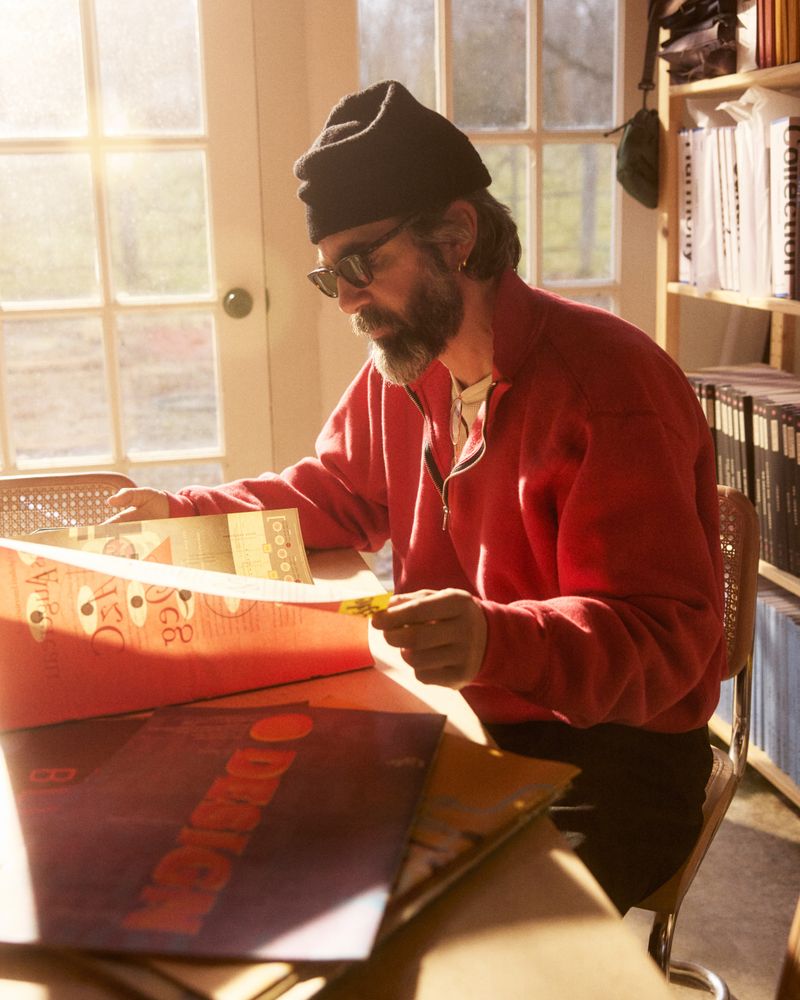
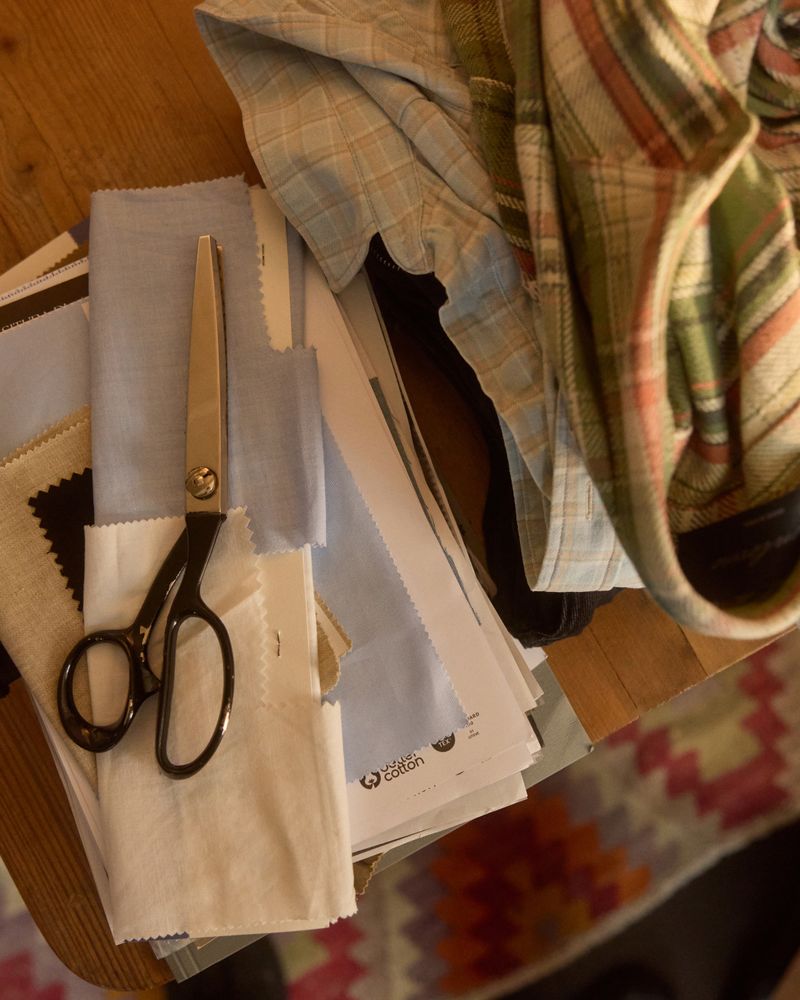
“It’s tenets,” he says of the collection, which lands on MR PORTER this week. “We’re just trying to make things that [people] reach for more than anything else. Which is… a very hard thing to do. It’s not easy to make disciplined, simple product. To make it look and feel elevated and at the same time become a favourite piece of yours that you’re just going to wear over and over again.”
You could even say that Levine’s whole life has been gearing up to this moment. For the past 20-plus years, he’s been reviving the fortunes of wayward giants such as Abercrombie and Club Monaco during its Ralph Lauren era. He’s also offered his styling wisdom to Aimé Leon Dore, among others. “Menswear legend” isn’t a phrase that he personally uses, although others have.
But you could go back further. “I’ve loved clothing since I was four years old,” as his website – of the aforementioned domain name – pitches it. “When I was little, I would lay things out on the floor. I would combine different colours, textures and fabrics in vignettes. Not even to wear. Just to see how everything looked together.”
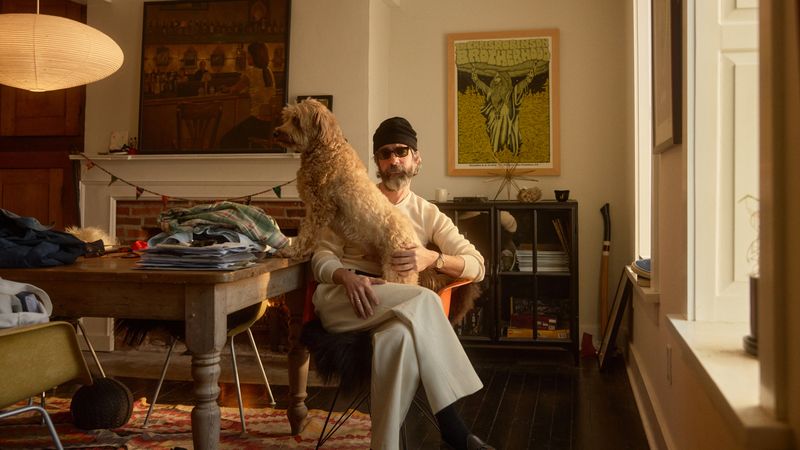
That origin story still comes into play when you see his Instagram feed. Particularly the “out-of-focus toilet shots” that he’s known for – selfies, with his big beard, usually his signature sunglasses and a beanie hat, wearing what can only be described as “a fit”, which have become his calling card.
When did these start? “I don’t know,” he says. “I was washing my hands after using the bathroom in my home airport.” (Being based in Granville, he ends up spending a lot of time in his local airport.)
“I turned around. They have a good mirror there and I’m like, ‘Oh, I like this combination of things. OK, cool, I can get a picture and that reminds me, I need to work on a piece like that’.”
He has a reputation as an influencer. But you get the sense that the person he’s really trying to influence is Aaron Levine. “I started to use Instagram as an archive for myself of things that I liked and how things went together,” he says.
“I started to use Instagram as an archive for myself of things that I liked and how things went together”
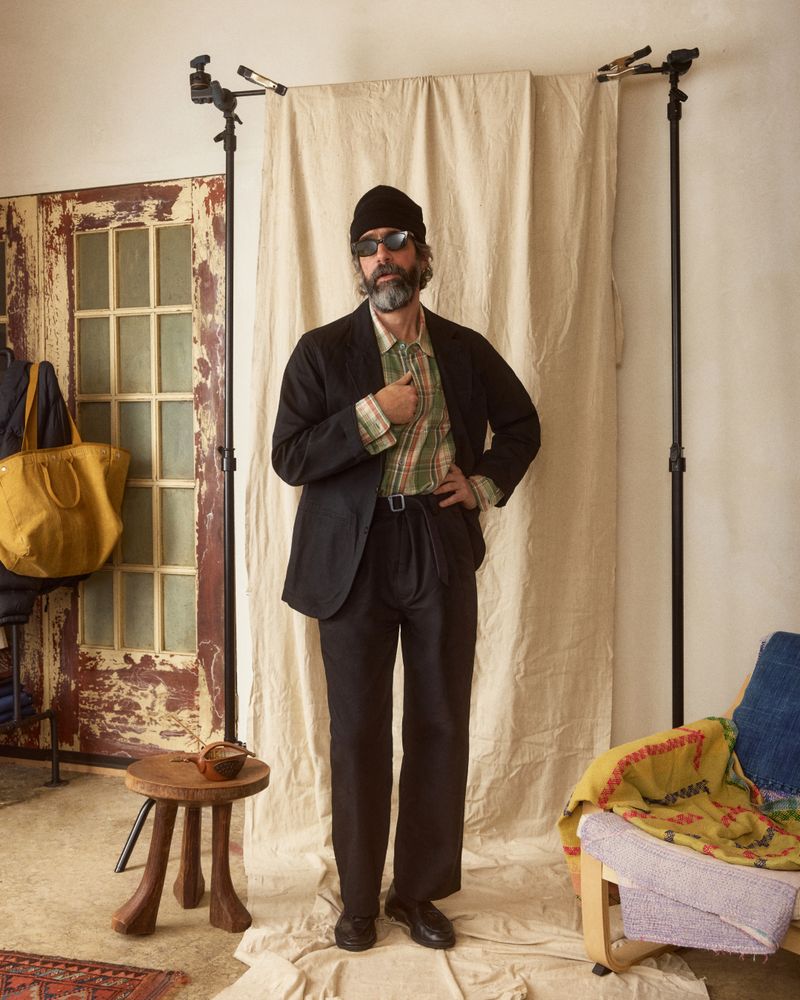
Now it’s become a mood board for the brand, too. “Inspiration for things I want to make,” Levine says. “To make sure in my own head that it doesn’t feel contrived or like a costume, which is not what we’re about. We’re not about costumes. We’re just about making nice things that are reliable and versatile and make you look more like yourself.”
He admits that he also often uses his pictures “as a hook to get people to read the comment” below. Here, he doesn’t just tap into how clothes are supposed to look but something even more important – how the wearer is supposed to feel.
“Sometimes, there are things in those comments that people can relate to,” Levine says. “You know, creative people in creative industries. We face, like... interesting challenges.”
He flags that a lot of his peers are also neurodiverse, which can present further complications “when trying to integrate into a society based on executive function. A linear conversation when we’re non-linear people.
“Maybe you have a story to share that could help some other people out there. That the words you use and the feelings you have could help them navigate their landscape.”
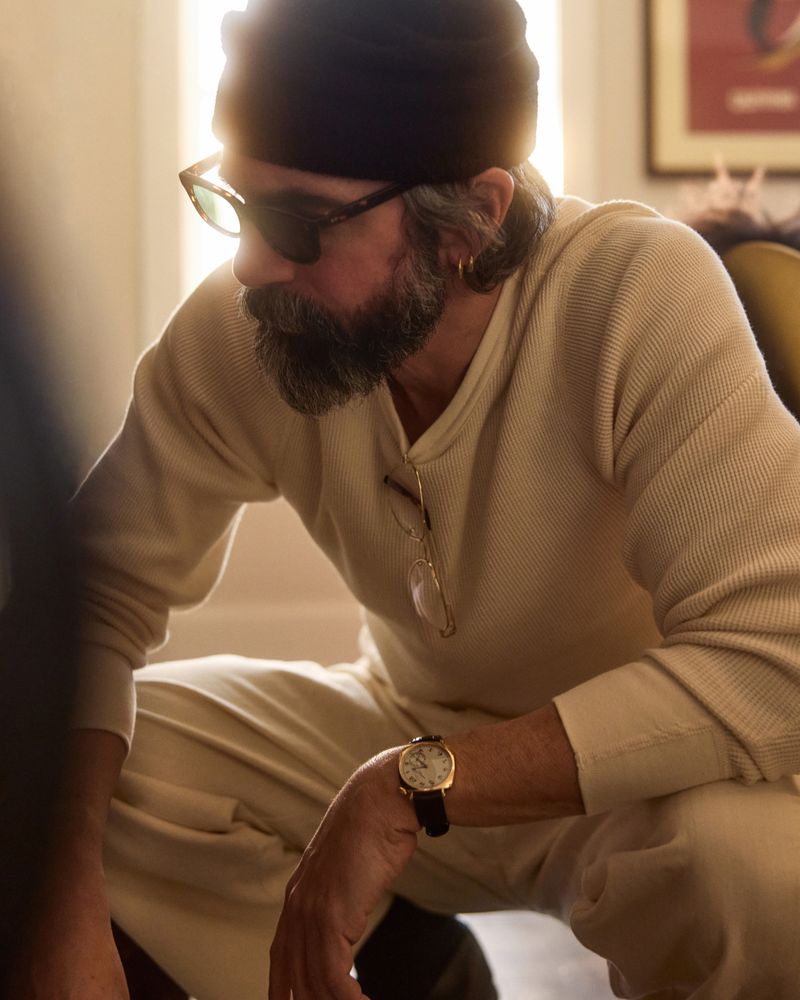
Doesn’t he feel self-conscious or exposed? Taking all these photographs in airport bathrooms. Then posting them on Instagram. While sharing his innermost feelings in the caption. “You know, my mum asked me something about this,” he says. “She’s like, ‘You know, when you see your picture someplace, what does that feel like?’ And I’m like, it’s not even me. I’m just a vessel for an idea. That’s why I wear the beanie and the glasses and the beard – it just becomes like a blank vessel for the idea.”
Despite his years in the fashion industry, what he says he is not is a “fashion” guy. “As I’ve gotten older, I understand that it’s not as much for me,” he says of the capricious nature of trends. “I end up reaching for the same kind of stuff every day.”
And that’s where he sees his own brand coming in. “I want to be the pair of pants that’s on the back of your chair because you just throw them on every morning,” he says. “The stuff that doesn’t even make it to your closet. You just take it off at night and you can wear it again the next day, and you still look as put together. You can dress it up or you can beat the hell out of it. That’s the whole point.
“It’s foundational stuff that we’re making. The best version of these things. We’re not trying to break anyone’s brain.”
Levine has already done the overthinking. So that you don’t have to.