THE JOURNAL

The British <i>Esquire</i> wonders if there will ever be another Mr David Bowie, Mr Paul Newman or Mr Steve McQueen.
When did we men stop minting celebrity style icons? Women manage it. They find a fresh one or two each season. And if you get invited to the right parties, or book the best tables in the hottest new restaurants, or sit long enough in the first-class lounge, you can even see them in the flesh. Mses Kate Moss and Sienna Miller over here, getting the drinks in. Mses Cara Delevingne and Kendall Jenner over there, furiously feeding Instagram. But famous men whose personal style truly impacts the way you and I shop, and how we put together a look? You could slide behind the velvet rope at the most exclusive celebrity shindig and still wait a lifetime to bump into the next Messrs Steve McQueen, Cary Grant or Frank Sinatra.
It’s not that all the most potent male celebrity style icons are dead, although the recent loss of Mr David Bowie was a cruel blow. Of the remaining “style icon hall of famers” – Messrs Bryan Ferry, Keith Richards, David Hockney and Sir Michael Caine (and that’s just the Brits) – few would argue that it is their current look that has the most influence on the way we shop. More likely, as with Mr Bowie, it’s an outfit they wore back in the 1960s, 1970s or 1980s. Mr Bowie is irreplaceable, and one suspects none of the above will be replaced, either. They certainly haven’t been to date.
Which isn’t to say there are no stylish celebrities today, even if so many best-dressed lists seem to comprise men who are simply famous, rather than famously well-dressed. (In fact, many of them are famously badly dressed.)

The exceptions, the young or youngish men who can still set – or at least confirm – trends are well known to us: Messrs David Beckham, Ryan Gosling, Mark Ronson and Pharrell Williams. These are men who can wear a suit – business or track – with enviable rakish insouciance. And yet still, their influence is minimal compared to that of their predecessors. Will any man, in 50 years’ time, be poring over photos of an off-duty Mr Gosling or red-carpet Mr Ronson in the way we still admire images of the young Mr Paul Newman, early Mr Elvis Presley, Mr Miles Davis in his pomp or the ever-confident Mr Jack Nicholson? The comparison seems unfair, doesn’t it? And that perhaps tells you all you need to know.
Because Mr McQueen looked as good as anyone ever will in chinos and a sweatshirt, it’s him who designers, editors, stylists and consumers turn to for style tips
So what happened? When did it stop? How come the leading lights of the long-departed counter-culture and the stars of mid-century Hollywood have more sway over the modern man’s sartorial choices than contemporary luninaries of stage and screen?
In a way, the answer is simple: men’s style hasn’t moved on. Like pop culture, it riffs on existing styles rather than inventing new ones. Because Mr McQueen looked as good as anyone ever will in chinos and a sweatshirt – yes, even better than Mr Beckham – it’s him who designers, editors, stylists and consumers turn to for style tips. It’s hard to find anyone who can rock a T-shirt, jeans and a biker jacket harder than Mr Marlon Brando – no, not even Mr Alex Turner – so why bother? When formal tailoring is the order of the day, it’s simply foolish to try to improve on Mr Grant. In other words, why look to new style icons when we already have plenty of immortals?
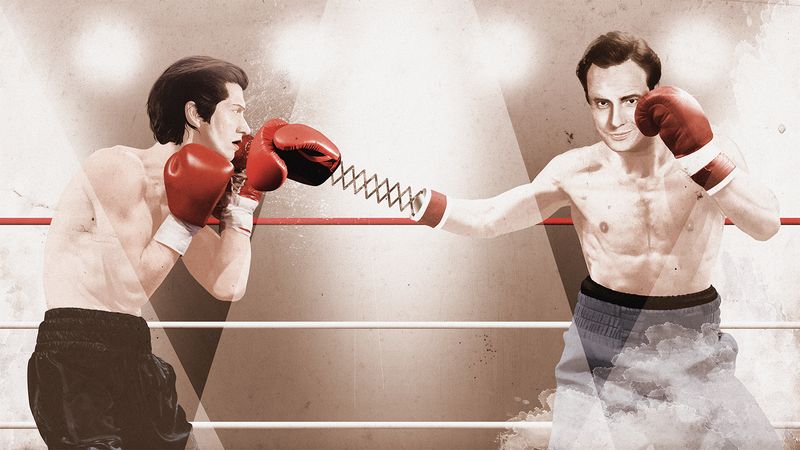
The list is almost endless. For elegant machismo, there are Messrs Gregory Peck, Sidney Poitier and Jean-Paul Belmondo. Double-breasted trad? Prince Charles. Black tie? Mr Yves Saint Laurent. Cool sportsmen? Messrs James Hunt, George Best, Joe Namath, Muhammad Ali and Pelé. Hip writers? Messrs Arthur Miller, Gay Talese or James Baldwin. A dapper comic? A young Mr Woody Allen.
Mr Clint Eastwood never had to suffer the indignity of being papped on his way to a CrossFit class. Mr Clark Gable didn’t have to contend with TMZ when he nipped out for a bite at Sardi’s
These men are icons of style because they were there when the looks we still wear today were invented. They helped invent them. And so they live on, ineffable, unflappable, forever young and good looking, with really great hair. (Except Prince Charles – sorry, sir.) They set a standard that has proved impossible to beat.
That’s not the only reason they endure, and today’s celebrities look aesthetically anemic alongside them. There are deeper cultural trends at work. Principally, the bewildering explosion – and concomitant cheapening and coarsening – of celebrity culture. Mr Clint Eastwood never had to suffer the indignity of being papped on his way to his CrossFit class, as Mr Bradley Cooper does. Unlike Mr Brad Pitt, Mr Clark Gable didn’t have to contend with TMZ when he nipped out for a bite at Sardi’s. Mr Humphrey Bogart was not required to change outfit three times a day, as Mr Daniel Craig is on the publicity tours that accompany each major film release. No wonder the stars of yore found it so much easier to keep their cool.
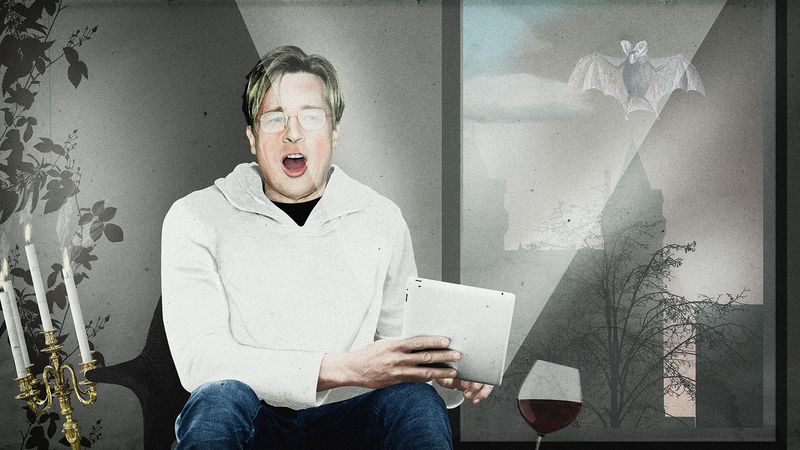
But here’s the good news. Social media, that most Warholian of technologies, has made all of us the stars of our own stories, equally prominent, in the “content” we and our friends and families and colleagues consume, as any famous person. Style icons still walk among us, but they are not famous, at least in the traditional sense. Thanks to street-style photography, carefully curated Tumblr accounts and endlessly refreshing Instagram feeds, it is possible for a well-dressed man to become a style icon on the smartphones of thousands of men’s-style aficionados without having to release a record, star in a movie, drive a racing car or write a novel, as men such as Mr Nick Wooster have proved.
Of course, this doesn’t fully replace the roles that earlier heroes played so well, because teaching the rest of us how to dress and wear our hair was only part of their job. In the pre-internet age, movie stars, rock legends and sporting heroes were more than just clothes horses. They were role models in the original sense. They taught us how to play the role of man. We learned to walk, talk, sit, eat, drink, drive, laugh, cry, win, lose, fight and fuck, all by watching Messrs Eastwood, Richards, Nicholson and Ali. That’s real power. Those men still have it. And they always will. Or, in other words, McQueen is dead; long live McQueen.
Illustrations by Mr Laurindo Feliciano