• The spring wish list Shop now

Search

MR PORTER

MR PORTER Logo
  • What's New
  • Designers
  • Clothing
  • Shoes
  • Accessories
  • Luxury Watches
  • Grooming
  • Sport
  • Lifestyle
  • Gifts
  • Editorial
  • Customer Service
  • Wish List
  • Register
  • Sign In

Call us

+1 877 535 3677
customercare@mrporter.com

THE JOURNAL

latest

fashion

grooming

watches

travel

lifestyle

latest

fashion

grooming

watches

travel

lifestyle

5 MINUTE READ

Why Manual Watches Have A Special Magic

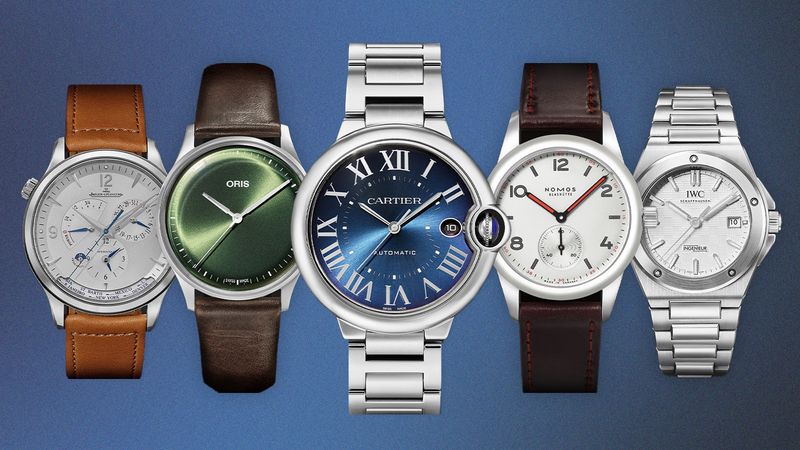
The invention of the automatic watch is one of the neatest there is. Imagine a mechanical device that gets all the power it needs simply by being used as intended. It’s almost magical. Nevertheless, its advent in the 1940s did not kill off the manual movement, and today the watch that you have to wind with your very own hand enjoys a proud place in the hearts of many aficionados. There is multi-faceted purity to a hand-wound movement. At the most elemental level, it changes your relationship with the watch. Neglect to wind it and it will sit there, prim, proper and unmoving. Then, when you miss that train, or arrive late for a big meeting, while you’ll be tempted to blame the watch, the fault will be yours alone. (Speaking from experience, it’s a mistake you make but once.) You get out what you put in with a hand-wound watch. Indeed, if automatics are like dogs, leaping into life the second we give them any attention, then manual movements are cats – they require greater investment. Still, being forced to play an active role in their operation is the reason most men warm to their hand-wound time-pieces. In today’s world, they provide a rare tactile connection to engineering. Hand-wound watches are less mechanically complex too, so in theory, there’s less to go wrong and a service should be quicker. Unlike automatic watches, manual specimens do not require a rotor, which leaves the carefully polished work beneath exposed. And while not every hand-wound model is a delicate waif, if you want to go ultra-thin, manual is the way forward. Here, then, is a selection of the best hand-wound watches available on MR PORTER.

Continue Reading

9 MINUTE READ

IWC Transformations: Mr Björn Frantzén

Like many professional chefs, Mr Björn Frantzén can trace his obsession with food back to a single, eye-opening moment. His epiphany came at the age of 12, he says, with a “perfect” steak-frites: “grilled beef, crunchy French fries, sauce béarnaise and a tomato and red onion salad with a perfectly balanced balsamic dressing. I knew straight away that I needed to become a chef, if only so I could learn to cook and eat this every day.” Such single-mindedness is hardly unusual in chefs, especially those with the drive to make it all the way to the top. As the owner and head chef of Restaurant Frantzén, the first and so far only restaurant in Sweden to hold the Michelin Guide’s fabled three-star rating, he certainly falls into this category. What’s unique about Mr Frantzén is that despite this precociousness, this clarity of ambition, his culinary career was far from certain. In fact, if it hadn’t been for an unusual heart condition, he might not have become a chef at all.

Continue Reading

8 MINUTE READ

A Rare Peek Inside The Vacheron Constantin Archives

The historic brand’s style and heritage director shows MR PORTER some of the house’s rarest pieces. When Mr Christian Selmoni, style and heritage director for Vacheron Constantin, was just 12 years old he received his first watch. “I remember I spent quite a lot of hours at night looking at it,” he says from his office in Geneva. “It was sort of a sports watch and had luminescent hands. I would just look at the hands glowing in the night.” Perhaps it was this pre-teen experience that led him eventually to the world of watchmaking, or perhaps it was the time spent watching his grandfather actually assembling watches at home. “My grandfather was an excellent watchmaker,” says Mr Selmoni. “I spent many hours watching him doing the assembly and this is how, I think, I got this interest, this passion for watchmaking.”

Continue Reading

16x9

4 MINUTE READ

Video: The IWC Schaffhausen Big Pilot’s Watch, Then And Now

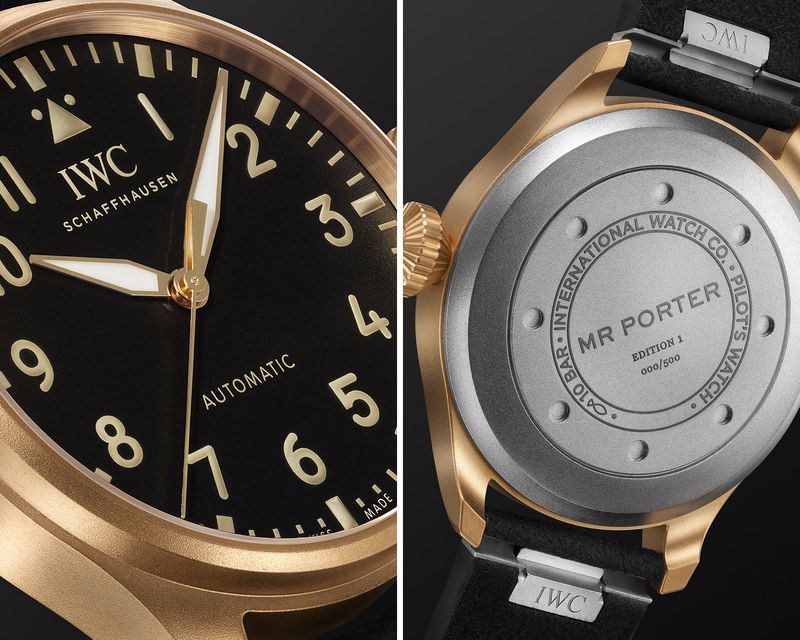
Anyone familiar with the wares of Schaffhausen’s International Watch Company will no doubt recognise the Big Pilot’s watch, a flagship model with a military heritage that stretches back to WWII. Fewer, however, will be intimately aware of the design’s subtle evolution over time or the way in which its original codes – the black dial, the minimal typography, the onion crown – changed the visual direction of watches for ever. To tell this story more fully, we decided to do a little archive digging and compare one of the 1,000 original ref IW431 pilot’s watches produced by IWC in 1940 with today’s Big Pilot’s watch, examining the lineage between the vintage model and the present-day bestseller.

Continue Reading

5 MINUTE READ

The Watchmaker Teaching Us To Go With The Flow

“We do not perceive ourselves as timekeepers, but time tellers instead,” says vice president and creative director Mr François Nunez when asked to explain the strange and wonderful world of HYT, a watch brand that depicts time’s passage with liquid. “Our ambition is to make sense of time by offering new perspectives.” Revolutionary? In the context of modern watchmaking, perhaps it is. But the idea of using water to measure time is nothing new. It dates back thousands of years to the clepsydra or water clocks of ancient Egypt. In their simplest form, they comprised a bowl or vessel with a small hole near the bottom and a series of notches marked onto the side at regular intervals. A few millennia later, the inventor and nuclear engineer Mr Lucien Vouillamoz embarked on a quest to combine the primitive technology of these ancient clocks with the mechanical innards of a modern wristwatch. Having realised that he couldn’t do it alone, in 2010, he decided to join forces with two investors, Messrs Patrick Berdoz and Emmanuel Savioz, and the former CEO of Concord watches, Mr Vincent Perriard, who had already played with liquid and mechanics, equipping the brand’s C1 Quantum Gravity with a liquid power-reserve indicator. For the movement, they solicited the services of Mr Jean-François Mojon and his team at Chronode, a specialist developer of watch calibers, which operates at the more radical end of the horological spectrum. The final piece of the puzzle was how to make the liquid hour-indicator work. In order to achieve this, Mr Vouillamoz founded Preciflex, a microfluid technology company. Just two years later, the brand’s first watch, the H1, was unveiled at Baselworld – one of the watch industry’s biggest trade fairs. To say it looked like nothing else on show is to flirt with understatement. The watchface was dominated by a pair of industrial pistons encircled by a tube containing a toxic-looking yellow liquid that might have been drawn straight out of Frankenstein’s lab.

Continue Reading

5 MINUTE READ

Why Manual Watches Have A Special Magic

The invention of the automatic watch is one of the neatest there is. Imagine a mechanical device that gets all the power it needs simply by being used as intended. It’s almost magical. Nevertheless, its advent in the 1940s did not kill off the manual movement, and today the watch that you have to wind with your very own hand enjoys a proud place in the hearts of many aficionados. There is multi-faceted purity to a hand-wound movement. At the most elemental level, it changes your relationship with the watch. Neglect to wind it and it will sit there, prim, proper and unmoving. Then, when you miss that train, or arrive late for a big meeting, while you’ll be tempted to blame the watch, the fault will be yours alone. (Speaking from experience, it’s a mistake you make but once.) You get out what you put in with a hand-wound watch. Indeed, if automatics are like dogs, leaping into life the second we give them any attention, then manual movements are cats – they require greater investment. Still, being forced to play an active role in their operation is the reason most men warm to their hand-wound time-pieces. In today’s world, they provide a rare tactile connection to engineering. Hand-wound watches are less mechanically complex too, so in theory, there’s less to go wrong and a service should be quicker. Unlike automatic watches, manual specimens do not require a rotor, which leaves the carefully polished work beneath exposed. And while not every hand-wound model is a delicate waif, if you want to go ultra-thin, manual is the way forward. Here, then, is a selection of the best hand-wound watches available on MR PORTER.

Continue Reading

9 MINUTE READ

IWC Transformations: Mr Björn Frantzén

Like many professional chefs, Mr Björn Frantzén can trace his obsession with food back to a single, eye-opening moment. His epiphany came at the age of 12, he says, with a “perfect” steak-frites: “grilled beef, crunchy French fries, sauce béarnaise and a tomato and red onion salad with a perfectly balanced balsamic dressing. I knew straight away that I needed to become a chef, if only so I could learn to cook and eat this every day.” Such single-mindedness is hardly unusual in chefs, especially those with the drive to make it all the way to the top. As the owner and head chef of Restaurant Frantzén, the first and so far only restaurant in Sweden to hold the Michelin Guide’s fabled three-star rating, he certainly falls into this category. What’s unique about Mr Frantzén is that despite this precociousness, this clarity of ambition, his culinary career was far from certain. In fact, if it hadn’t been for an unusual heart condition, he might not have become a chef at all.

Continue Reading

8 MINUTE READ

A Rare Peek Inside The Vacheron Constantin Archives

The historic brand’s style and heritage director shows MR PORTER some of the house’s rarest pieces. When Mr Christian Selmoni, style and heritage director for Vacheron Constantin, was just 12 years old he received his first watch. “I remember I spent quite a lot of hours at night looking at it,” he says from his office in Geneva. “It was sort of a sports watch and had luminescent hands. I would just look at the hands glowing in the night.” Perhaps it was this pre-teen experience that led him eventually to the world of watchmaking, or perhaps it was the time spent watching his grandfather actually assembling watches at home. “My grandfather was an excellent watchmaker,” says Mr Selmoni. “I spent many hours watching him doing the assembly and this is how, I think, I got this interest, this passion for watchmaking.”

Continue Reading

16x9

4 MINUTE READ

Video: The IWC Schaffhausen Big Pilot’s Watch, Then And Now

Anyone familiar with the wares of Schaffhausen’s International Watch Company will no doubt recognise the Big Pilot’s watch, a flagship model with a military heritage that stretches back to WWII. Fewer, however, will be intimately aware of the design’s subtle evolution over time or the way in which its original codes – the black dial, the minimal typography, the onion crown – changed the visual direction of watches for ever. To tell this story more fully, we decided to do a little archive digging and compare one of the 1,000 original ref IW431 pilot’s watches produced by IWC in 1940 with today’s Big Pilot’s watch, examining the lineage between the vintage model and the present-day bestseller.

Continue Reading

5 MINUTE READ

The Watchmaker Teaching Us To Go With The Flow

“We do not perceive ourselves as timekeepers, but time tellers instead,” says vice president and creative director Mr François Nunez when asked to explain the strange and wonderful world of HYT, a watch brand that depicts time’s passage with liquid. “Our ambition is to make sense of time by offering new perspectives.” Revolutionary? In the context of modern watchmaking, perhaps it is. But the idea of using water to measure time is nothing new. It dates back thousands of years to the clepsydra or water clocks of ancient Egypt. In their simplest form, they comprised a bowl or vessel with a small hole near the bottom and a series of notches marked onto the side at regular intervals. A few millennia later, the inventor and nuclear engineer Mr Lucien Vouillamoz embarked on a quest to combine the primitive technology of these ancient clocks with the mechanical innards of a modern wristwatch. Having realised that he couldn’t do it alone, in 2010, he decided to join forces with two investors, Messrs Patrick Berdoz and Emmanuel Savioz, and the former CEO of Concord watches, Mr Vincent Perriard, who had already played with liquid and mechanics, equipping the brand’s C1 Quantum Gravity with a liquid power-reserve indicator. For the movement, they solicited the services of Mr Jean-François Mojon and his team at Chronode, a specialist developer of watch calibers, which operates at the more radical end of the horological spectrum. The final piece of the puzzle was how to make the liquid hour-indicator work. In order to achieve this, Mr Vouillamoz founded Preciflex, a microfluid technology company. Just two years later, the brand’s first watch, the H1, was unveiled at Baselworld – one of the watch industry’s biggest trade fairs. To say it looked like nothing else on show is to flirt with understatement. The watchface was dominated by a pair of industrial pistons encircled by a tube containing a toxic-looking yellow liquid that might have been drawn straight out of Frankenstein’s lab.

Continue Reading

5 MINUTE READ

Why Manual Watches Have A Special Magic

The invention of the automatic watch is one of the neatest there is. Imagine a mechanical device that gets all the power it needs simply by being used as intended. It’s almost magical. Nevertheless, its advent in the 1940s did not kill off the manual movement, and today the watch that you have to wind with your very own hand enjoys a proud place in the hearts of many aficionados. There is multi-faceted purity to a hand-wound movement. At the most elemental level, it changes your relationship with the watch. Neglect to wind it and it will sit there, prim, proper and unmoving. Then, when you miss that train, or arrive late for a big meeting, while you’ll be tempted to blame the watch, the fault will be yours alone. (Speaking from experience, it’s a mistake you make but once.) You get out what you put in with a hand-wound watch. Indeed, if automatics are like dogs, leaping into life the second we give them any attention, then manual movements are cats – they require greater investment. Still, being forced to play an active role in their operation is the reason most men warm to their hand-wound time-pieces. In today’s world, they provide a rare tactile connection to engineering. Hand-wound watches are less mechanically complex too, so in theory, there’s less to go wrong and a service should be quicker. Unlike automatic watches, manual specimens do not require a rotor, which leaves the carefully polished work beneath exposed. And while not every hand-wound model is a delicate waif, if you want to go ultra-thin, manual is the way forward. Here, then, is a selection of the best hand-wound watches available on MR PORTER.

Continue Reading

9 MINUTE READ

IWC Transformations: Mr Björn Frantzén

Like many professional chefs, Mr Björn Frantzén can trace his obsession with food back to a single, eye-opening moment. His epiphany came at the age of 12, he says, with a “perfect” steak-frites: “grilled beef, crunchy French fries, sauce béarnaise and a tomato and red onion salad with a perfectly balanced balsamic dressing. I knew straight away that I needed to become a chef, if only so I could learn to cook and eat this every day.” Such single-mindedness is hardly unusual in chefs, especially those with the drive to make it all the way to the top. As the owner and head chef of Restaurant Frantzén, the first and so far only restaurant in Sweden to hold the Michelin Guide’s fabled three-star rating, he certainly falls into this category. What’s unique about Mr Frantzén is that despite this precociousness, this clarity of ambition, his culinary career was far from certain. In fact, if it hadn’t been for an unusual heart condition, he might not have become a chef at all.

Continue Reading

Discover More Watches

  • The Watches Pushing The Boundaries Of Watchmaking

    6 MINUTE READ

  • Five Classic Watches That Have Stood The Test Of Time

    5 MINUTE READ

  • Why Vintage Watch Collectors Go Mad For Patination

    5 MINUTE READ

  • Explaining The Weird And Wonderful (And Exclusive) HYT Watches

    2 MINUTE READ

Sign Up For Style News

Stay informed about the latest style advice and product launches. Learn more about our emails and our Privacy Policy 

  • Youtube
  • Facebook
  • Twitter
  • Instagram

Call us

+1 877 535 3677
customercare@mrporter.com

Change Country

CanadaEnglish
  • About Us
  • MR PORTER Health In Mind
  • Advertising
  • Affiliates
  • Careers
  • Our Apps
  • Gift Cards
  • FAQs
  • Contact Us
  • Delivery
  • Payments
  • Returns
  • Privacy Policy
  • Cookie Policy
  • Terms & Conditions

SHOP FOR HER

NET-A-PORTER.COM sells must-have luxury fashion from over 300 of the world's most coveted designers

Shop on NET-A-PORTER
© 2020 Mr Porter