THE JOURNAL

All photographs courtesy of ©ON
Most of us can run. All you need is appropriate footwear and the ability to get out and puff around for a bit and you’re a runner. Congratulations. Doing it well, though, now that’s an art form in and of itself. And with so much running advice out there, it can be difficult to know where to start. Is it all about distance? Splits? Recovery? Gear? Getting a foothold can be as exhausting as actually going out for a run.
To make things simpler for you, we asked some of the best runners, coaches and record-holders around to share their straight-forward, under-the-radar running tips. You don’t need to do all of these, but they will each make a difference to your cadence, comfort and timings. Pick what works for you to maximise your output with the minimum of fuss and effort.
01. Train for your body, not the event
“Everything I read about ultra training says go long, but I’m not built like a runner,” says Stuart Davis, an ultrarunner with a degree in sports science, and co-founder of footwear brand Dubs Universe. “I enjoy lifting heavy weights and my cardio is fine. Instead of grinding out endless long runs, I do a solid 20k, then go straight back out the next morning for 10k. I’m training my body to run tired, because when I hit that 30 to 45k mark in the race, that’s exactly what I’ll be. It beats boring long runs where motivation tanks!”
02. Use your arms
One of the fastest ways to unlock a higher gear is by roping in your arms, especially as fatigue sets in. “When you need to lift pace, think about driving your elbows back with slightly more intent while keeping the movement compact and controlled,” says the running instructor Oliver Black. “Avoid letting your arms swing across your body, as this can waste energy and disrupts your alignment. It’s a subtle shift, but often the quickest way to unlock speed without forcing it.”
03. Test your shoes at every speed
Don’t just buy the flashiest pair of shoes you can find and go full pelt. Think “horses for courses” and test out where your shoes perform best. “Often, a shoe that feels mediocre at a slow jog can come alive during tempo or interval efforts,” says the 2023 World Ironman champion Lucy Charles-Barclay. “I’ll usually do some 1km repeats, alternating easier pace and faster efforts. By doing this, I figure out if the shoe is going to be my go-to for easy long runs, tempo sessions or a fast repeat race shoe.”
04. Run with friends

“Running with other people can really improve your pacing discipline and push you through sessions that you’d cut short if you were alone,” says Brett Durney, a runner and PT at Fitness Lab. “By joining a running club, you remove the mental burden of self-motivation on the days you have low energy and create natural accountability.”
05. Practice your turns
Cornering isn’t something most runners think about until it costs them valuable time and momentum. But if your race route includes tight turns or frequent direction changes, it’s worth practising in training. “The key is to stay controlled and avoid braking too hard before the turn,” Charles-Barclay says. “Lean slightly into it, keep your cadence quick and push smoothly back into your stride as you exit. It’s a small skill, but it can make a noticeable difference, especially in shorter races or technical courses.”
06. Breathe
It sounds obvious, but catching your breath mid-run is essential. “The ‘diaphragmatic breath’ is great,” says the fitness instructor and author Eloise Skinner. “Focus on deep breaths drawn down towards your belly, rather than tight breaths into your chest. This type of breathing allows your lungs to take in more oxygen, providing you with more energy as you move.”
07. Look where you’re going
“Your eyeline has a surprisingly big impact on your posture and efficiency,” Charles-Barclay says. “Instead of staring down at your feet, keep your gaze forward, around the horizon or slightly above. This encourages a taller posture and helps open up your chest for better breathing. Looking down can cause you to hunch, restricting airflow and affecting form.”
08. Set your goals
Knowing you have a long run ahead of you can be exhausting, especially with many miles still to go. Abigail Ireland, the founder of Understanding Performance, suggests breaking your run into micro-targets. “Pick a person or landmark ahead to aim for and only focus on getting to or beyond that point. Once you reach it, pick another. This keeps you engaged in the moment rather than imagining how far away the finish line is.” Another tip? “Go through the alphabet, looking for anything in your environment starting with A, B, C and so on to keep you occupied while running.”
09. Mix it up
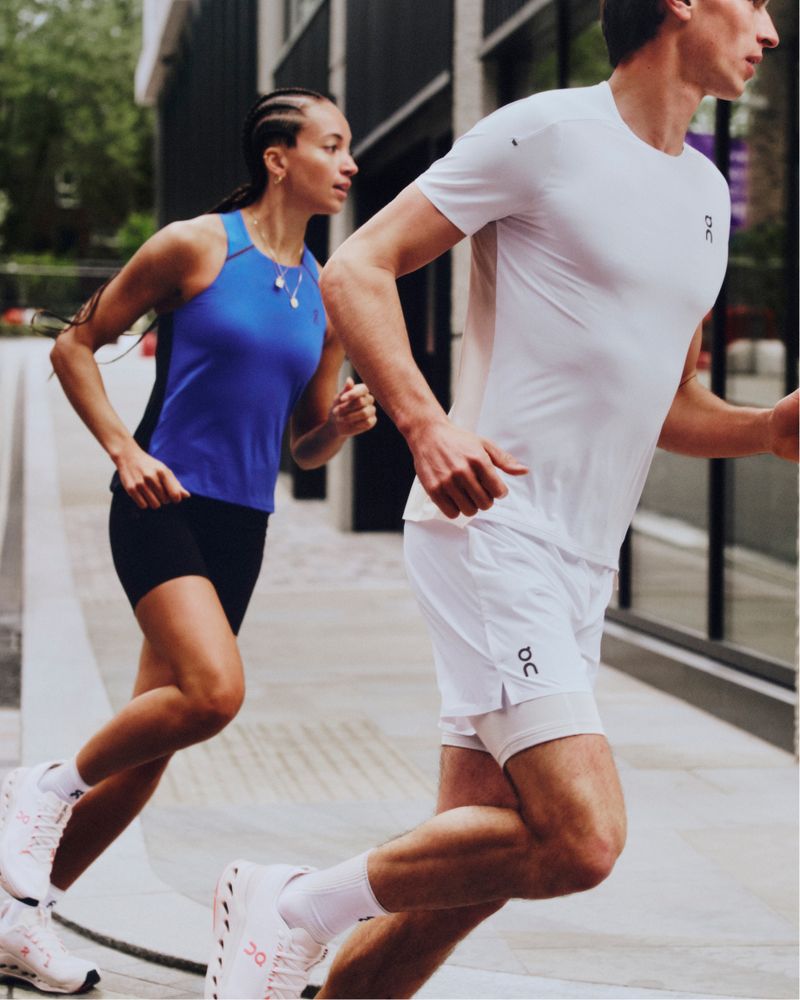
You might prefer to run on grass, but the reality is sometimes we have to run on concrete, too. Mix up your training so you’re prepared. And don’t sleep on gym sessions, either. “People often dismiss treadmill running, thinking that it’s a poor substitute for getting outside,” Durney says. “But when it’s used correctly, it’s a valuable training tool. The fact that it’s a controlled environment allows you to dial in your pace or effort with precision, which is incredibly useful when you’ve got recovery weeks and you need to make sure you’re not going too hard.” Set the incline to one per cent to compensate for the lack of wind resistance and uneven ground outside.
10. Keep it tight on the hills
“Uphill, you need to shorten your stride, lift cadence, lean slightly forwards, and drive your arms,” says the ultrarunner and Enerton ambassador Danny Brunton. “Downhill, it’s about control without braking: quick, light steps under your centre of mass, soft knees and relaxed quads. Let gravity help but stay balanced to avoid over-striding and excess impact. Don’t force things and try to keep the effort steady.”
11. Get a gait analysis
“Foot strike is one of the most debated topics in running, but the truth is it’s highly individual,” Charles-Barclay says. While forefoot striking was once seen as the gold standard, it’s not necessarily the only efficient way to run. “Many runners naturally fall into a midfoot pattern, which works perfectly well,” adds Charles-Barclay. Book an analysis at your local running shop to make sure you’re putting your best foot forward.
12. Never run a loop

Davis runs in one direction only: towards victory. “Every kilometre I run is a kilometre from my front door, and the only way back is to turn around and do it again,” he says. “It takes away any easy ‘out’.” It makes sense – it’s easy to quit when you’re passing your front door again mid-run. “It’s a pretty lazy kind of self-discipline, but when I’m up at 5.00am for a 20km run, it really helps,” he says.
13. Look after your ankles
“Some people like the ‘ankle alphabet’,” Skinner says. “Sitting on a chair with one foot on the ground, lift the other foot and imagine your big toe is a pencil. Begin to slowly draw the alphabet from A-Z with your big toe, then switch sides. This exercise can be quite fun to perform, as well as improving ankle mobility, control, strength and precision.”
14. Rehearse
It sounds obvious, but prep is king. “Ever heard the saying ‘nothing new on race day?’” asks Louis Alexander, a three-time world-record holder. “Before everyone one of my marathons, whether it was in the Arctic or Antarctic, I did full rehearsals, testing everything from my gear down to the smallest practical details. That way I can arrive at the start line, not questioning ‘can I do this?’ But instead, ‘how well can I do this?’”
15. Learn from the best (and their podcasts)
If you’re looking for extra running insights, podcasts can be a goldmine. Many elite athletes share their training philosophies, race experiences and practical advice for free. “A favourite of mine is Paula’s Run Club, a podcast by none other than marathon queen Paula Radcliffe,” Charles-Barclay says. “Listening to her talk through her own challenges and breakthroughs has given me both motivation and perspective. It’s like having a coach in your ear on an easy run. And it’s a great way to make those longer runs fly by.”