THE JOURNAL

Pilotless planes, designer cabins and competitive prices – it is time to upgrade for your next flight.
I recently flew on a private jet from London Luton to Zurich with Surf Air. I rolled up at the gleaming glass Signature terminal in a taxi on a dark, wet morning, with half an hour to spare before my 7.10am departure (although, in fact, you can arrive as little as 10 minutes before). After an online background check completed in advance, all I had to do was show my passport and relax on a sofa in the lounge. There are no security checks. Within moments I was delivered a pot of tea – there was also free Moët champagne, in both full-size and mini bottles, but it was still a bit early for that.
I was one of two passengers on my Surf Air flight (the other was a Swiss businessman), and the co-pilot personally welcomed us on board, telling us to help ourselves to snacks and drinks from the bar when airborne. My fellow traveller was a self-described “serial entrepreneur”, who said he booked with Surf Air the night before as an experiment. It was more expensive than business class on Swiss, he said, but decided the premium was worth it for the speed and ease of the journey. After take-off, it took just over an hour to land at the dedicated ExecuJet terminal in Zurich (we were 15 minutes early). A ground handler was there to greet us as soon as the door opened and the steps came down. She walked us inside, where there was a quick passport check, and then out to an awaiting taxi. Going back to cattle class will be a struggle.
As the world’s major airports become ever-more crowded, flying on commercial airlines is going to become increasingly stressful. London Heathrow currently operates at 98 per cent of its capacity (flights are capped at 480,000 annually), which is why there are plans to build a third runway; but in 20 years, every airport in the capital is going to be full. By 2030, our skies will be so congested that there will be 50 times more delays with the International Air Transport Association predicting that by 2035, there will be 7.2 billion air travellers globally, double the number in 2016.
For frequent business flyers with an expense account – and holidaymakers who earn big bucks – the answer is to use private jets. In Europe alone, there are 3,000 airfields that can accommodate them, versus just 300 airports for commercial airlines that use bigger planes. And a handful of innovative companies are beginning to extend this glamorous mode of transport to more than celebrities, bankers and royals by bringing the price right down and selling seats instead of entire jets (which might cost £10,000 for an eight-seat Citation XLS from London to Nice). If you are pining for a return to the golden age of air travel, this is the closest you are going to get.
AFFORDABLE FLYING

Described as the “Netflix of air travel”, Californian subscriber-based start-up Surf Air came to London this summer, offering £3,150 “all-you-can-fly” monthly packages that allow you to go back and forth to Ibiza, Cannes and Zurich as many times as you like. (Munich, Milan and Luxembourg in 2018.) Unlike traditional charters where you have exclusive use of the jet and can request when you want to fly, Surf Air sells seats on scheduled journeys in both Europe and the US that depart at specific times throughout the week. (If you have top-tier status with British Airways, Virgin Atlantic or Air France Platinum, you can get a free trial flight.) It uses a combination of eight-seat Embraer Phenom 300s, the new improved version of “the best-selling business jet in the world” and, from next year, Pilatus PC-12s, one of the most reliable and the longest-range aircraft of its type.
Headquartered in Florida, JetSmarter is another disrupter. Just like UberPool, you can download the app and request a seat on a private jet with strangers. It launched its annual Simple membership in March – for US$5,000 a year plus a US$2,500 initiation fee, you get a specific number of free seats on “Jet Shuttle” scheduled routes such as London to New York (from $1,760 on a Gulfstream IV SP, Nice and Geneva, as well as free one-way “Jet Deals”. Using this, you can snap up amazingly cheap seats on “empty legs” (where the aircraft is returning to its home base) – for example, $300 for San Francisco to San Diego on a Citation X, $198 from Prague to Stuttgart or $270 from Paris to Bordeaux.
DESIGNER JETS
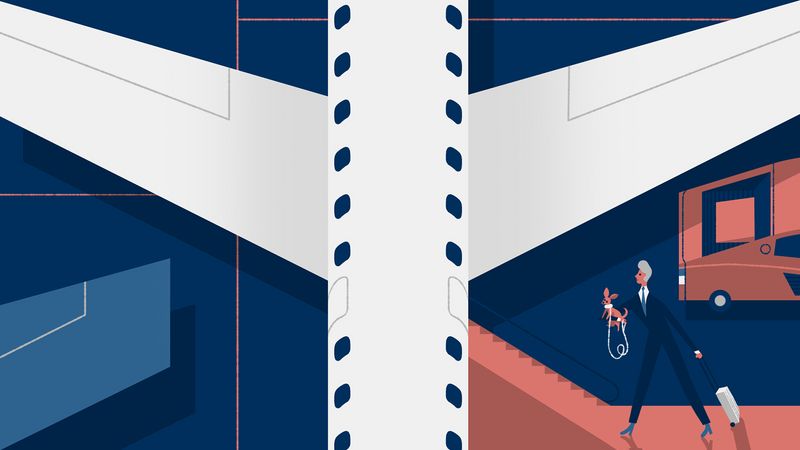
For the really smart flyer, France-based European aircraft manufacturer Airbus and Italian hypercar designer Pagani Automobili have come together to create the futuristic Infinito cabin for the new ACJ319neo plane. The standout feature is its “sky ceiling”, which makes it look like a convertible, but is actually a digital screen displaying a live feed of the sky above. The jet can seat eight passengers and fly for a whopping 15 hours, meaning you could travel from Los Angeles to Hong Kong without stopping to refuel. (This list price for this plane is $99.5m, not including the Infinito get-up.)
Even more outlandish is the growing trend for turning B787 Dreamliners (which are typically used by commercial airlines to transport more than 300 passengers at a time) into private flying residences (or Boeing Business Jets), rather like Air Force One’s B747s. The first to do this was Kestrel Aviation Management, which designed the interiors of this uber-luxury jet into a first class apartment for 40 people with sofas, day beds, dining tables, plush carpet, cinema screens and even a master suite with a king-sized bed and two-person showers in a hotel-style bathroom. If you want to give it a whirl, it costs £20,000 an hour to charter.
Unveiled this year, the Avanti Piaggio Evo is the world’s fastest twin-turbo propeller plane, which zooms through the clouds at roughly 460mph, and has a range equivalent to the distance between London and Moscow. Made by hand by Piaggio Aerospace in Italy, the eye-catching Evo, with its smooth curved body and pointed nose, costs a cool £6m and is sold exclusively in the UK by ConnectJets – you may not be able to justify buying one yourself, but companies such as Surf Air are looking at adding it to their fleets.
Ms Gabriella Somerville, managing director of ConnectJets says: “She takes a six- to nine-month build and we invite the client down to come and see her. And then slowly as the engines, the hydraulics and the wings are added, we send them pictures. The customer has the autonomy to create their own machine. We have partnered with a luggage brand LONB, which creates soft, pliable bags that fit into the hold and match the leather seats. We work with [caterer] Absolute Taste and the Aviation Nutritionist to create bespoke bento boxes for the flight. You can even install a cappuccino machine for $60,000 if you want your espresso at altitude.”
Other collaborations are coming from fashion brands such as Versace and Armani that are turning their hand to fitting out private jets. Meanwhile, VistaJet has turned to Le Labo for bespoke in-flight fragrances, London bookseller Heywood Hill for curated in-flight libraries, Moncler for crew uniforms, the British Butler Institute for training, Nobu for the catering and renowned mixologist Mr Simone Caporale for cocktail recipes. If you like the sound of all this, it will cost about $15,000 an hour.
SELF-FLYING PLANES
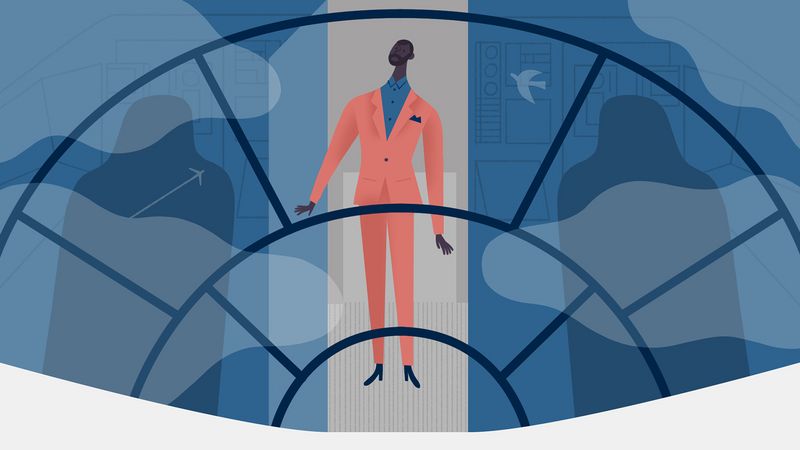
We all know planes can fly on auto-pilot, but how would you feel if there was no pilot in the cockpit? Like it or not, plans for fully autonomous aircraft powered by artificial intelligence are already taking off. Just like self-driving cars, the promise is for improved safety by removing the risk of human error, one of the primary causes of accidents. In Dubai, Blade Runner-style drones have already embarked on test flights, the vision being for them to whizz between tower blocks, transporting tourists in sci-fi flying taxis. Airbus is working on delivering self-piloted, electric flying taxis by 2020, with a prototype of the four-rotor Pop.Up rumoured for next year. Uber and Google-backed Kitty Hawk are working on similar projects.
This summer, it was announced that Boeing is also going to start testing self-flying planes to help cope with the need for hundreds of thousands of new pilots, as more planes enter our airspace over the coming years. According to a report from Swiss bank UBS, robotic aircraft could save more than $35 billion a year in lower fuel costs, lower insurance and the removal of pilot salaries.
But the big problem will be convincing passengers that it is safe to fly in them. A UBS survey of 8,000 people showed that just 17 per cent would be comfortable with travelling on an AI plane, while 54 per cent said they wouldn’t set foot on one, even if it was cheaper. However, UBS predicts that “acceptance would grow over time”. Although the first large-scale planes to go autonomous will be carrying cargo, small, self-flying private jets will prove the ideal case study among early adopters who are willing to take a leap of faith.
BOUTIQUE AIRPORTS
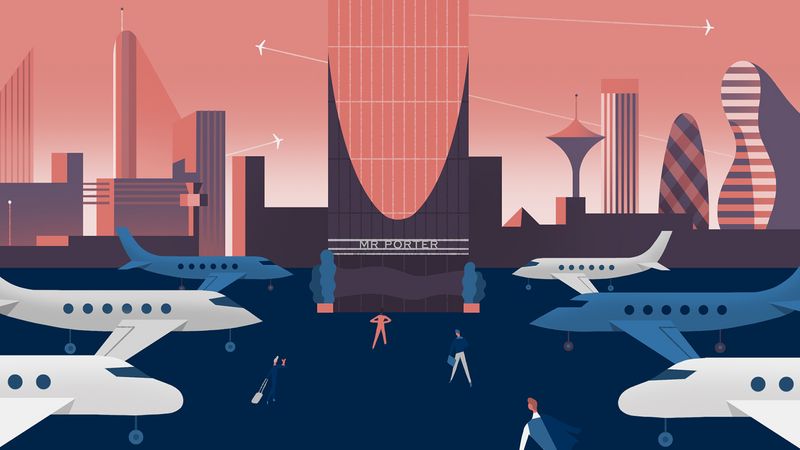
As commercial airports turn into monster hubs for the world’s biggest airlines, chic, design-forward satellite terminals for private jets will form a counter trend. Located in the depths of the English countryside – but just 12 minutes by helicopter from London’s Battersea – TAG Farnborough is a space-age airbase of undulating steel and glass. Setting the benchmark for FBOs (fixed base operators) in Europe, it has private lounges, showers, dedicated concierges and even a pet travel scheme, which allows you to take your dog on board without quarantine, if it complies with the necessary government regulations
In November, Stobart Aviation opened a cutting-edge jet centre at Southend Airport (42 miles from central London), which will be open 24 hours a day and cater for 5,000 flights a year by 2022. A growing number of companies are also building their own private aviation hubs. At Nike’s global headquarters in Portland, next to Hillsboro airport, is Nike’s Air Hangar 1, one of the most design-led private jet terminals on the planet. Boxy in shape, with glossy all-white hangars decorated with posters of Nike ambassadors, not only does it have a gourmet kitchen, stylish meeting spaces and lounges, but a fitness centre (but maybe that’s not surprising). If you work for Nike, you might just get a chance to experience it. In years to come, FBOs will perhaps collaborate with luxury brands, so one might potentially see Soho House interiors, La Mer spas, Dom Pérignon bars and canapés by Mr Heston Blumenthal. Sounds good to us…
Jet sets
Illustrations by Ms Emmanuelle Walker