THE JOURNAL

When it comes down to it, a belt really only has one job: to keep your trousers up. The first examples date back to the Bronze Age, when they were used by our ancestors to holster tools. But from the 20th century, when they usurped braces, this strip of leather or fabric has been our go-to mechanism for holding our pants in place. And in our book, that makes it a need.
Which isn’t to say that every outfit must have one. Traditionally, suit trousers come without belt loops because they should be measured to fit the wearer. But it also doesn’t mean that the belt should be confined to an exclusively utilitarian duty. Function-first it may be, but it also offers real estate for those who want to make a statement. Front and centre.
One historical moment when belt buckles became a big thing is captured in the 1993 film Dazed And Confused, with what kids wore on their waist taking a pivotal sartorial role in that depiction of Austin, Texas in the mid-1970s. (Quentin Tarantino reportedly tried to buy one actor’s belt off him for $200,000.) And, if the SS26 collections are to be believed, here and now might be another time and space that this workhorse accessory is to enjoy show-pony status.
At its core, the belt still has a clear task to serve. And while it has developed little in terms of its functionality, makers have experimented with material, colour, buckle style and width. How much of an assertion you plan to make with yours is up to you. Here’s our guide to punching up your waistband, seen through the prism of a hierarchy of needs.
01. The need to hold your trousers up
You could argue that our biggest priority every day is to ensure our trousers don’t fall down. Enter: a man’s first belt. This might be a strip of black leather with a standard metal buckle – many men will rely on one belt to hold up their jeans, chinos and tailored trousers. This is a relatively straightforward purchase, and you can easily find great options from brands like Mr P. and Anderson’s. But once this need is met, you might wonder if your belt suits the occasion…
02. The need to suit your surroundings


You’ve secured your waistline, but is your belt formal enough for your outfit? Just like the tie with little dinosaurs may not suit the job interview, your weekend jeans will call for a different belt than your tailored trousers.
Generally, a narrow belt – 3cm in width or less – is seen as more formal, pairing well with tailored trousers or suit pants. The 2.5cm Cardon leather belt from Saman Amel has plenty of character while looking sophisticated.
On the other hand, a wide belt, such as this 4.5cm version from RRL is more fitting for a workwear or western outfit. For your favourite weekend denim or chinos, opt for something in between – 3.5cm wide is always a good bet.
03. The need to connect (your belt with your shoes)
At this point in the hierarchy, it’s time for the belt to play an aesthetic role, so our next step is to think about colour. And now that we are considering a belt beyond its utility, we can think about how it can create harmony in an outfit. The most straightforward rule is to match the material of your belt with the material of your shoes. A black leather belt with black leather loafers; a brown suede belt with brown suede boots. An exact match is great if you’re dressing up, but a casual outfit can tolerate a few shades of difference between the two.
Similarly, if you wear jewellery, such as a silver watch, or gold rings, you might want to match the buckle to that metal. These are some of the easier ways to make your outfit look considered.
04. The need to leave a mark
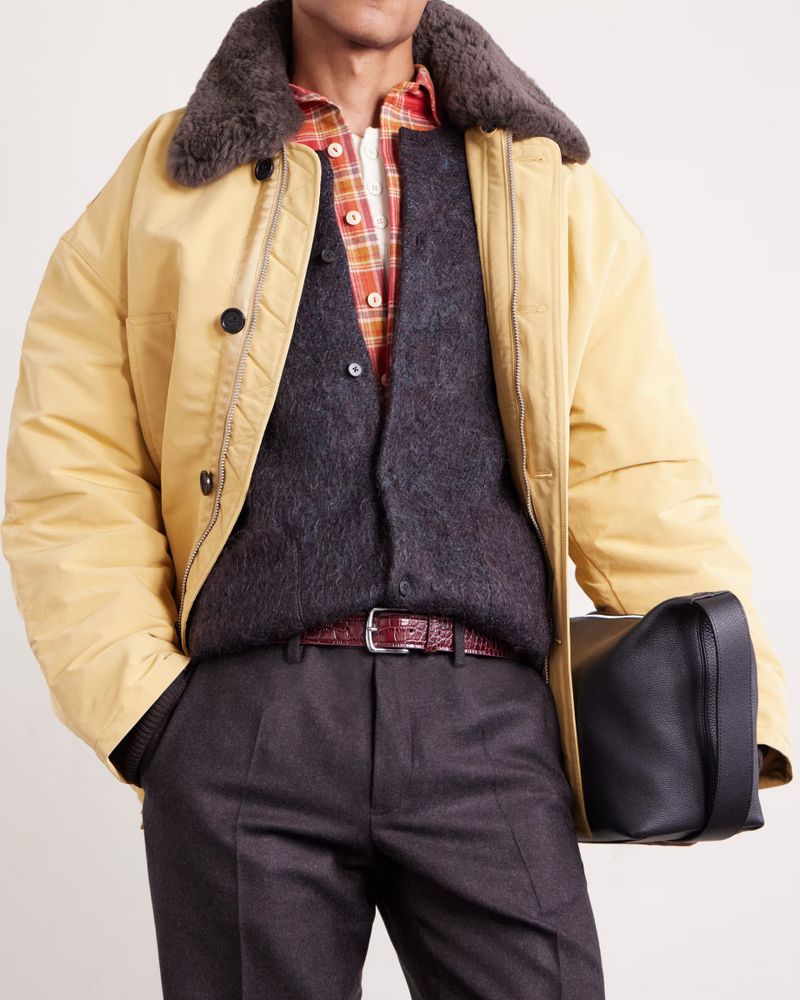
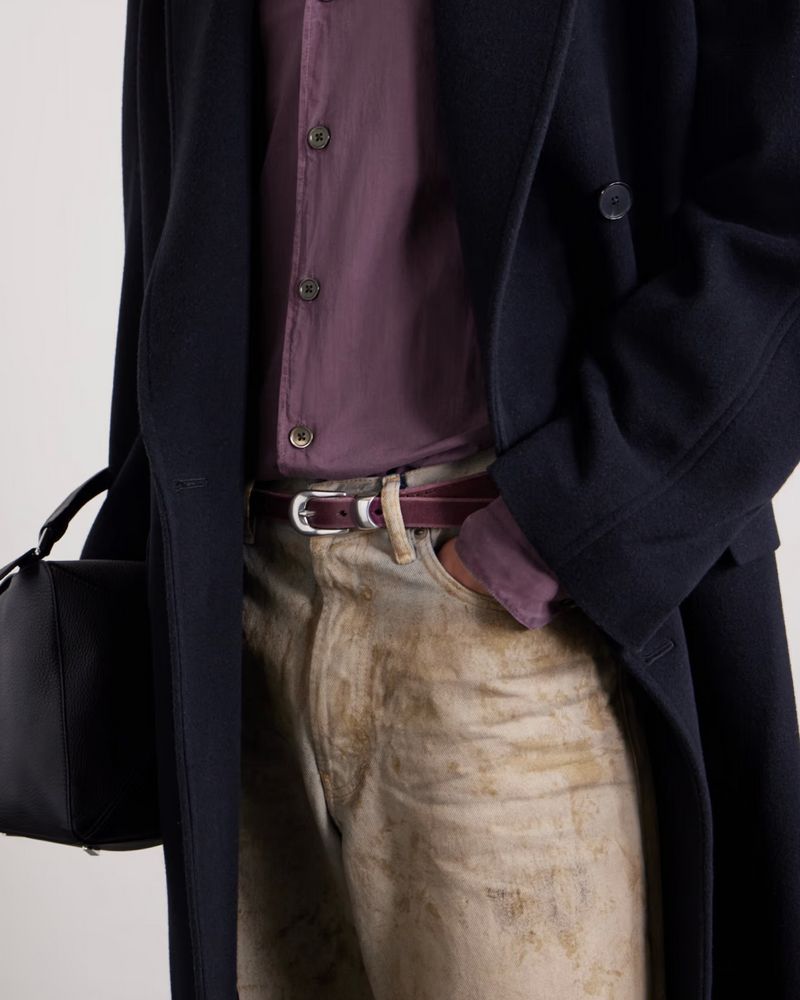
At this level, we are crossing into the territory of statement belts. Unique colours, exotic leathers, details on the buckle. This is when the belt comes into its own. Aesthetic choice is now equal to function.
A woven belt lends some texture to a relaxed summer fit, while something like a green suede belt from Loro Piana adds an accent colour that changes the entire look. A burgundy croc-effect leather belt by George Cleverley, meanwhile, is enough to make an otherwise simple outfit more interesting. This brown pony-hair belt from MORJAS is more understated, but the texture will catch the eye of anyone who gets close enough to see it.
And of course, there is the hardware. Belt tips, like those on Our Legacy’s 2cm leather belt, reference western detailing without going full cowboy. Unorthodox buckles can veer on kitsch, but the T in this TOM FORD suede belt is subtle enough without losing its charm.
Wearing a more prominent belt is a true embrace of the accessory. It shows taste and consideration. It is, however, not the final stage of our hierarchy, where the belt becomes a symbol.
05. The need to self-actualise (as well as keep your trousers in place)
According to the psychologist Abraham Maslow’s 1943 hierarchy of needs, the final level of human motivation is self-actualisation. This is the desire to transform into the grandest version of ourselves. In our framework, it is where the belt has surpassed function, formality, harmony and memorability, to become a marker of identity.
It’s hard to look past the punk-inspired belts of Enfants Riches Déprimés without noticing the intricate buckles and pyramid studs through the side, made to complement the distressed jeans and leather jackets synonymous with late-1970s punk rock. These belts were made specifically for people who identify with the punk attitude and ethos but live in the luxury bracket.
The western cowboy – or, indeed, Texan teenager – is also known for his iconic belt, with heavy buckles that fasten heavy, studded leather on top of his well-worn denim. Anderson’s embellished and embossed leather belt has studded patterns made to pop below a tucked-in shirt and above a set of cowboy boots, while the etched hardware of Drake’s 2.5cm suede belt pays subtle homage to the western influence.
Here, the belt is calling the shots. A punk belt without the aggressive styling to match is a gimmick. A rugged western belt without the denim or French tuck looks lost. And truthfully, this level is probably beyond most men and their belts. But understanding the spectrum makes even the simplest choice clearer. The decision to not make a statement is just as important as the decision to do so. Your belt doesn’t have to go to the fifth level, but it can still be intentional.